


Summer Edition
Sun, sea… and game on!
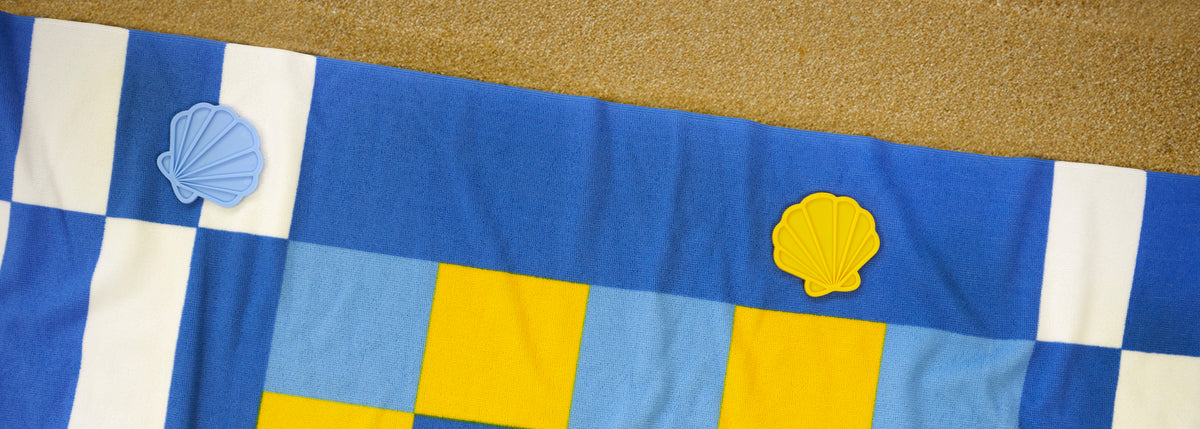
These beach towels turn any day at the beach into a moment to play. Just unfold the towel, take out the pieces, and follow the instructions to get started. Here you’ll find step-by-step guidance on how to set up the board and how to play.
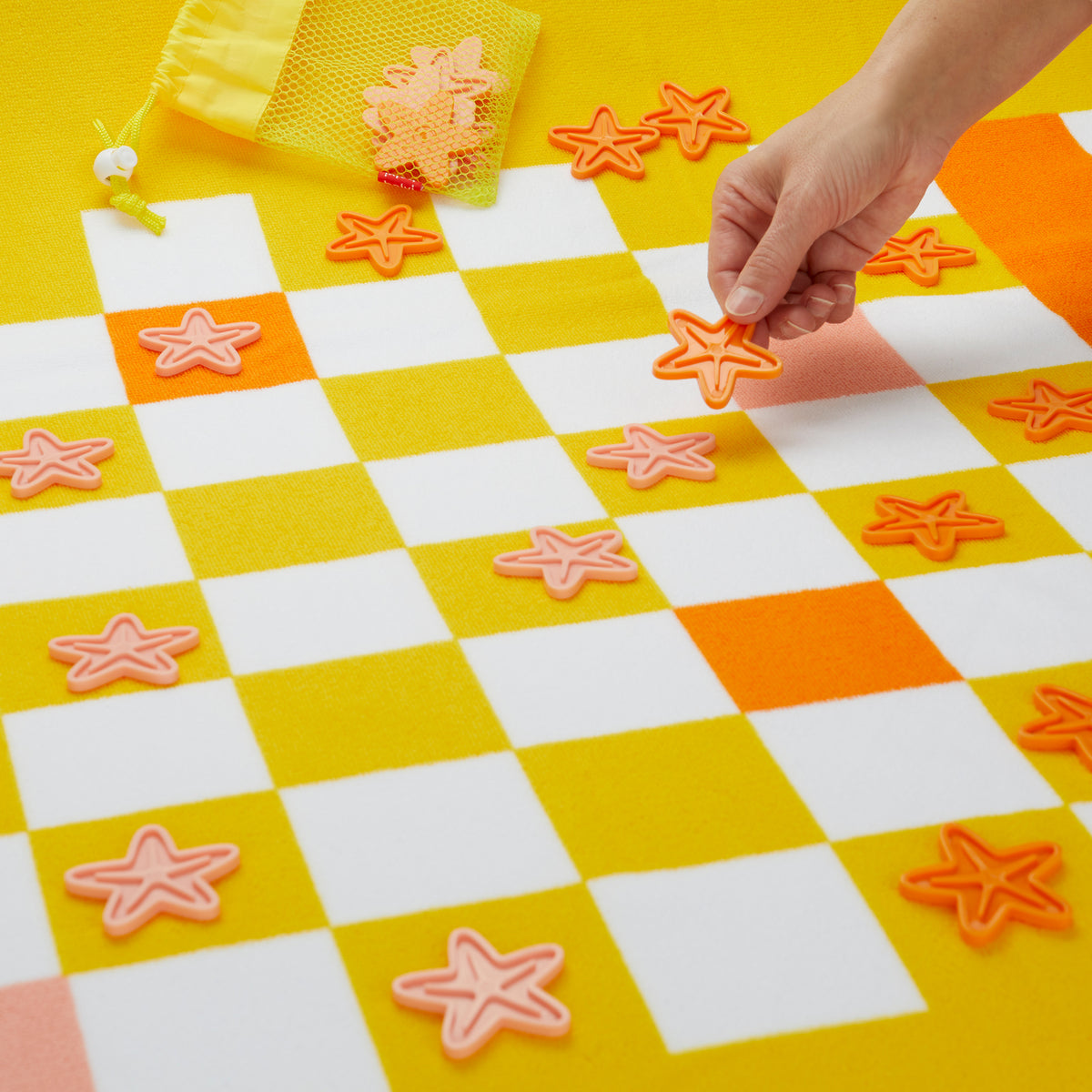
Capture all of your opponent's pieces or block them so they can't make any legal move.
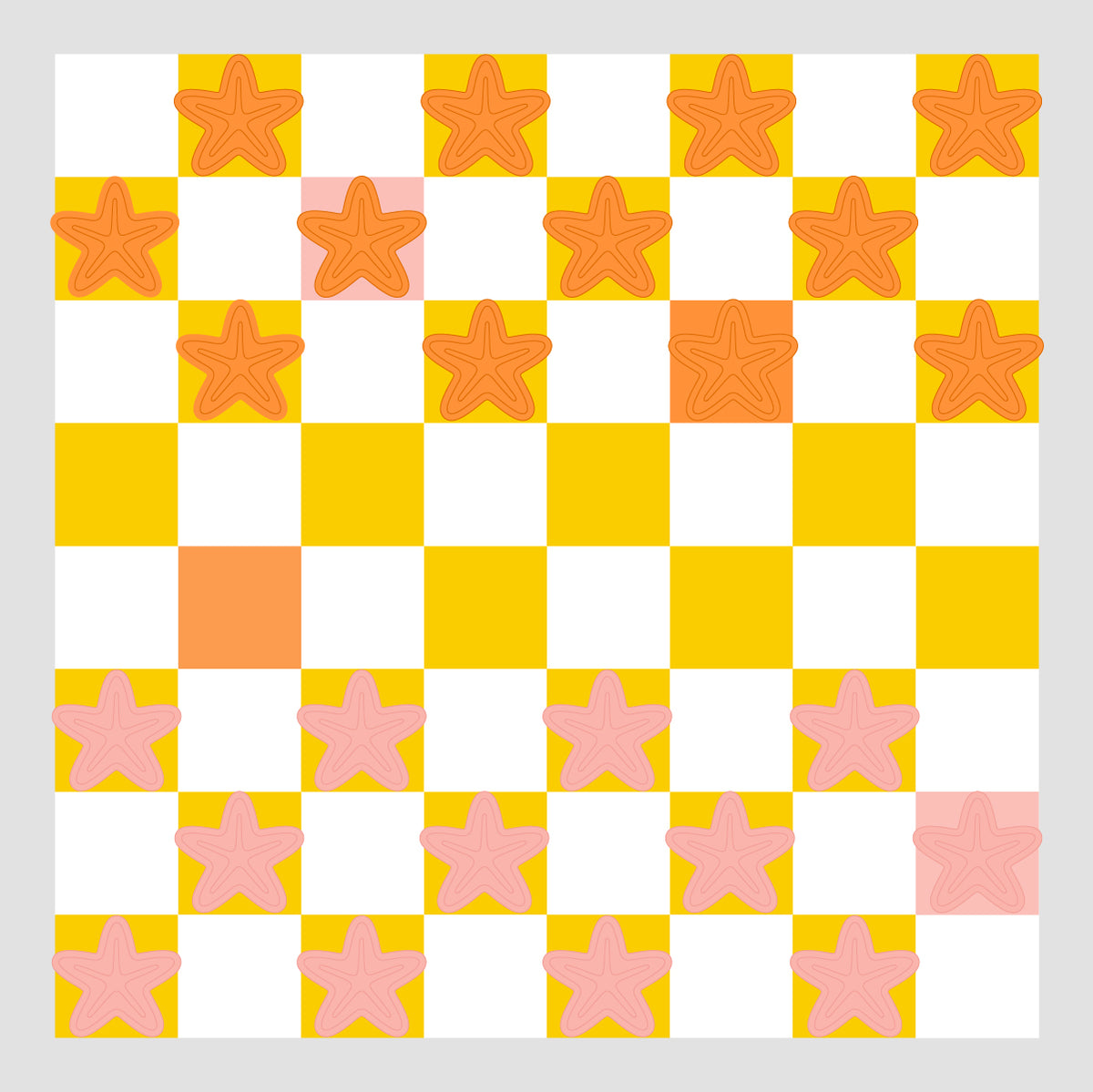
Each player chooses a color and places their 12 pieces on their side of the board, using only orange and yellow squares.
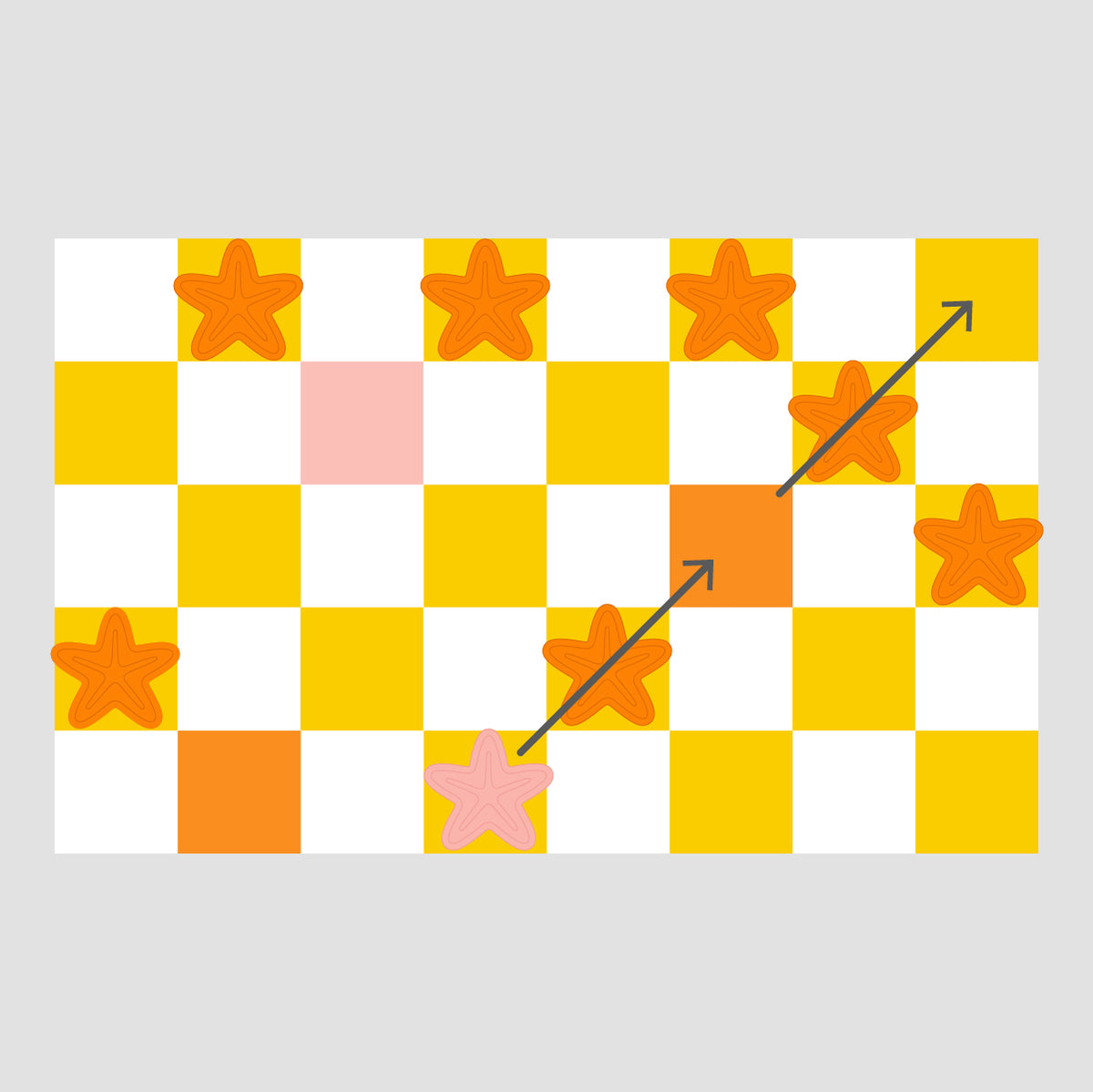
At the start of the game, pieces can only move diagonally forward, one square per turn, using the orange and yellow squares (never the white ones).
To capture an opponent’s piece, a player must jump diagonally over it to an empty square, removing the captured piece from the board. If a player can capture a piece, they’re obliged to do so.
If your landing square allows another capture, jump again over the next checker. Continue jumping until no more captures are possible.
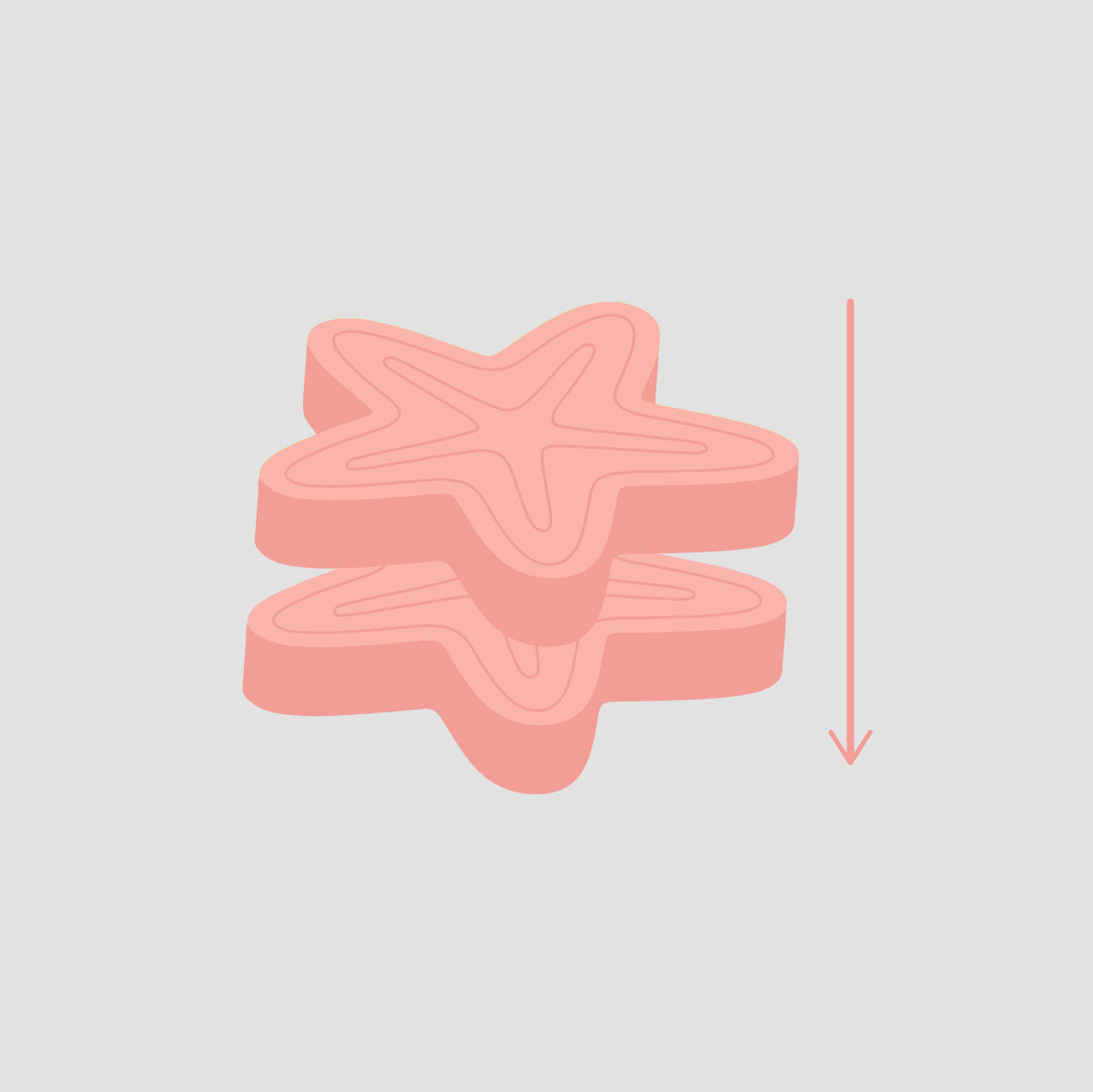
You can crown a checker that reaches the opposite edge of the board. This gives you an advantage: kings can move diagonally both forward and backward. Kings are usually indicated by placing another piece of the same color on top (“crowning”).
There are two ways to play checkers: in one, the king may move only one square at a time, while in the other, it can move any number of squares diagonally (known as a flying king). You choose!
Capture all of your opponent's pieces or block them so they can't make any legal move.
Each player chooses a color and places their 12 pieces on their side of the board, using only orange and yellow squares.
At the start of the game, pieces can only move diagonally forward, one square per turn, using the orange and yellow squares (never the white ones).
To capture an opponent’s piece, a player must jump diagonally over it to an empty square, removing the captured piece from the board. If a player can capture a piece, they’re obliged to do so.
If your landing square allows another capture, jump again over the next checker. Continue jumping until no more captures are possible.
You can crown a checker that reaches the opposite edge of the board. This gives you an advantage: kings can move diagonally both forward and backward. Kings are usually indicated by placing another piece of the same color on top (“crowning”).
There are two ways to play checkers: in one, the king may move only one square at a time, while in the other, it can move any number of squares diagonally (known as a flying king). You choose!
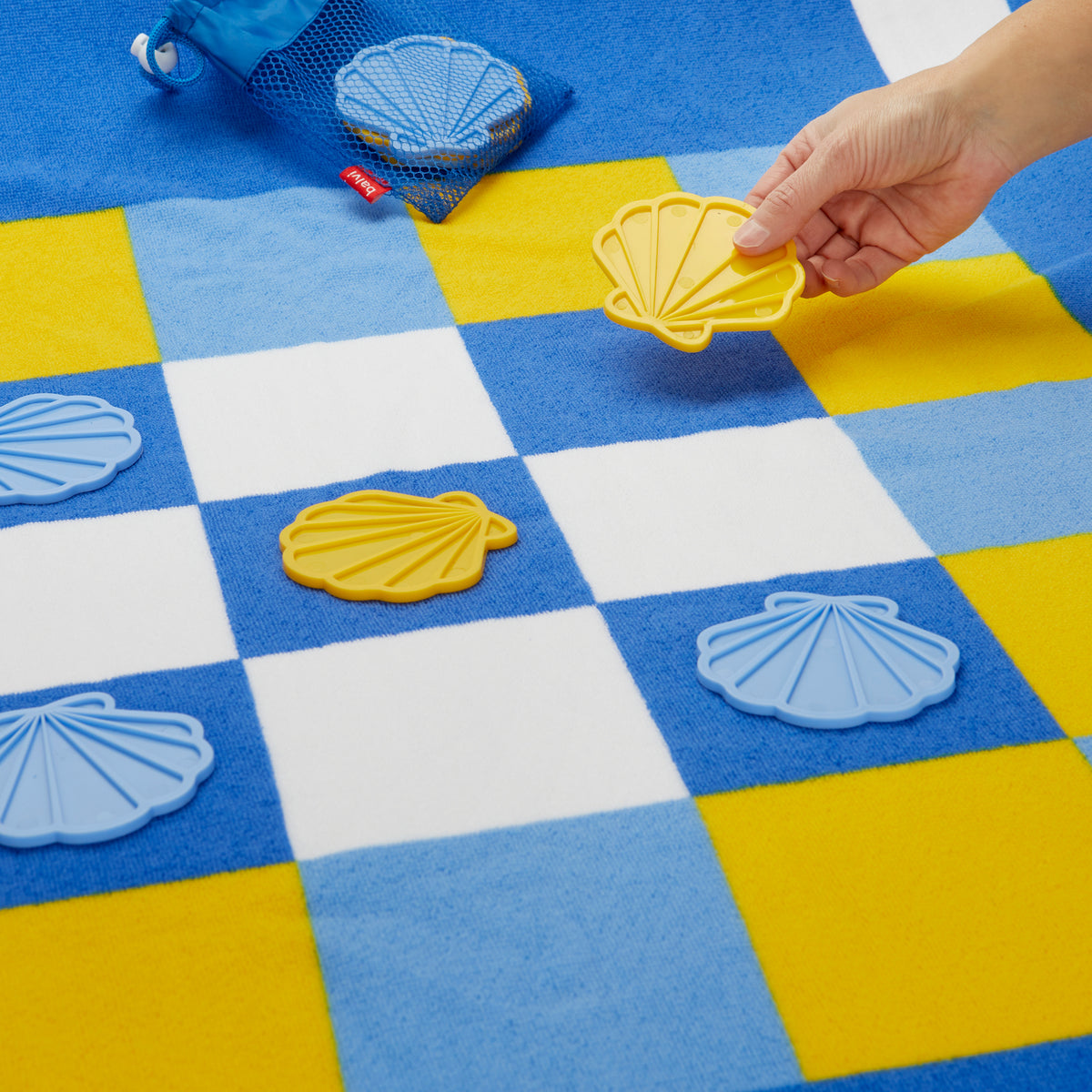
Classic Version
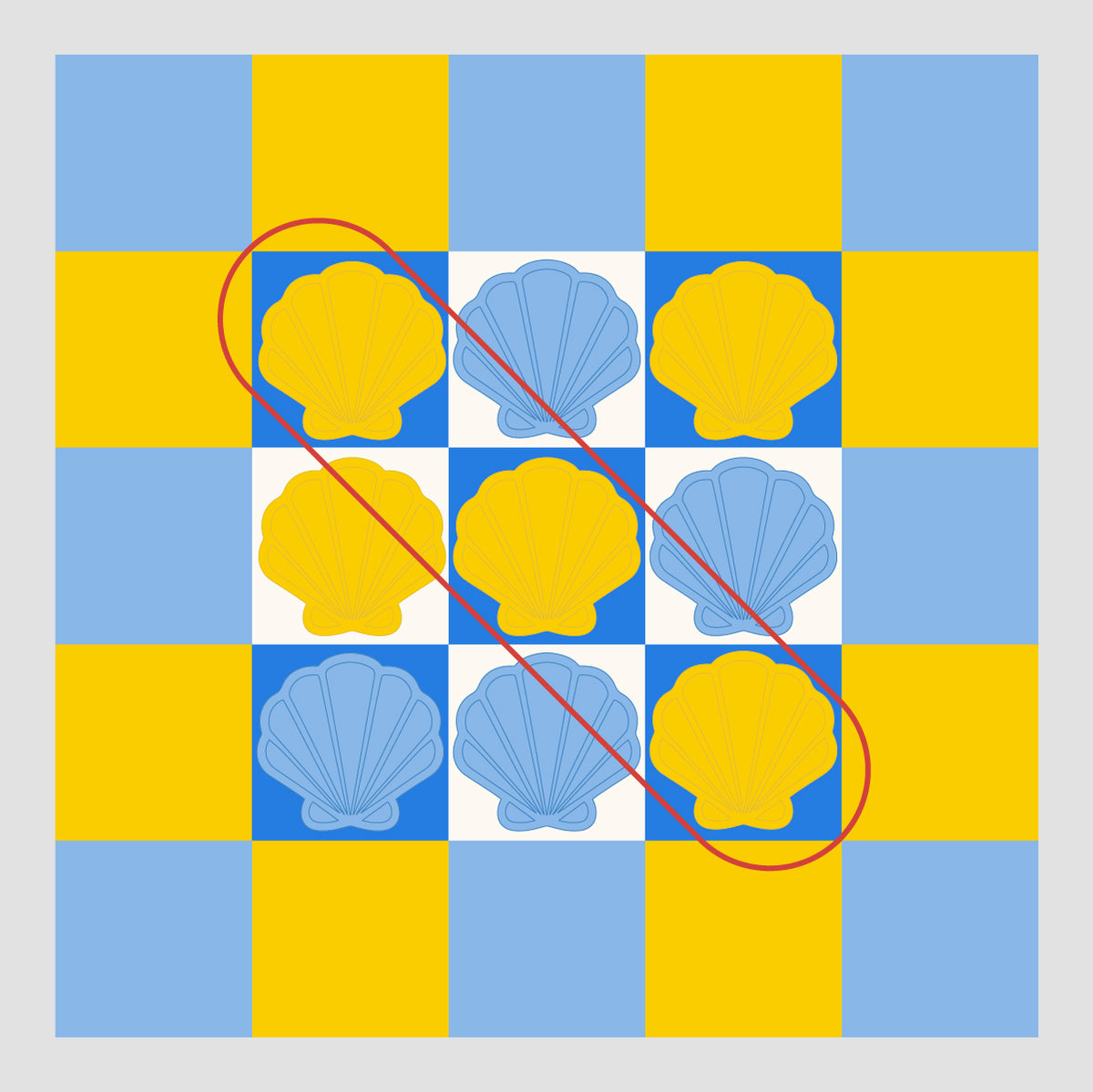
Be the first player to form a line of three pieces (horizontal, vertical, or diagonal).
Each player chooses a color. Players then take turns placing their pieces on the white and blue board. Once a piece is placed, it can’t be removed.
If the board is completely filled and no player has formed a line, the game ends in a draw.
Be the first player to form a line of three pieces (horizontal, vertical, or diagonal).
Each player chooses a color. Players then take turns placing their pieces on the white and blue board. Once a piece is placed, it can’t be removed.
If the board is completely filled and no player has formed a line, the game ends in a draw.
Dynamic Version
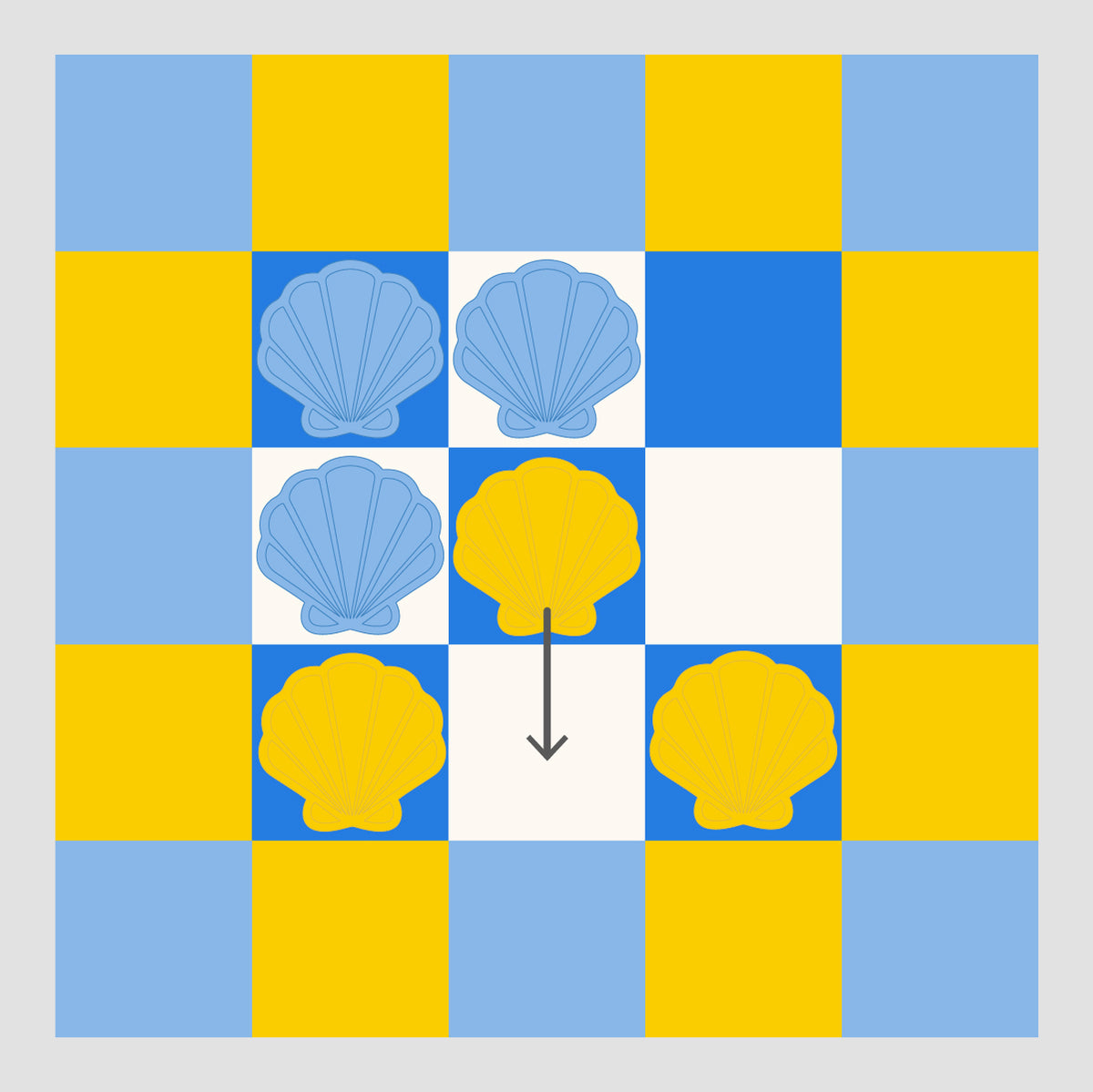
The objective remains the same, but in this variant each player has only three pieces.
In the first phase, both players take turns placing their pieces on the white and blue board. If a player forms a line of three, they win immediately.
If no player wins during this phase, the game moves to the next stage:
Players take turns moving one of their pieces to an adjacent empty square until one of them succeeds in forming a line of three.